
A countertop has to do more than look good on installation day. It needs to handle weeknight dinners, kids’ homework, hot pans, spills, and the daily wear that comes with a busy Sacramento home. Comparing the top countertop materials before finalizing a kitchen remodel helps you spend wisely on a surface that fits your household, budget, and cleaning routine.
The right choice is rarely the most expensive one. A large family that cooks often may value stain resistance and easy cleanup above natural variation. A homeowner updating a rental or preparing to sell may prioritize a clean, durable look at a controlled price. The best countertop is the one that performs well for the way you actually use your kitchen.
What to Consider Before Choosing a Countertop
Start with how the kitchen works today and what you want it to do after the remodel. Countertops affect food preparation, storage layout, backsplash choices, sink installation, and the overall feel of the room. They also need to work with your cabinetry. A heavy stone slab, for example, may require cabinetry that is level, secure, and properly supported.
Daily maintenance matters just as much as appearance. Some homeowners are comfortable resealing natural stone and using a cutting board every time they chop vegetables. Others want a surface they can wipe down quickly without worrying about stains. Be honest about that difference before selecting a sample based on color alone.
Budget should include more than the material price. Measurements, fabrication, edge details, cutouts for sinks and cooktops, removal of old tops, plumbing disconnection and reconnection, and backsplash work can all affect the final project cost. Reviewing the full scope early helps avoid surprises once construction begins.
Top Countertop Materials and How They Perform
Quartz: Reliable and Low Maintenance
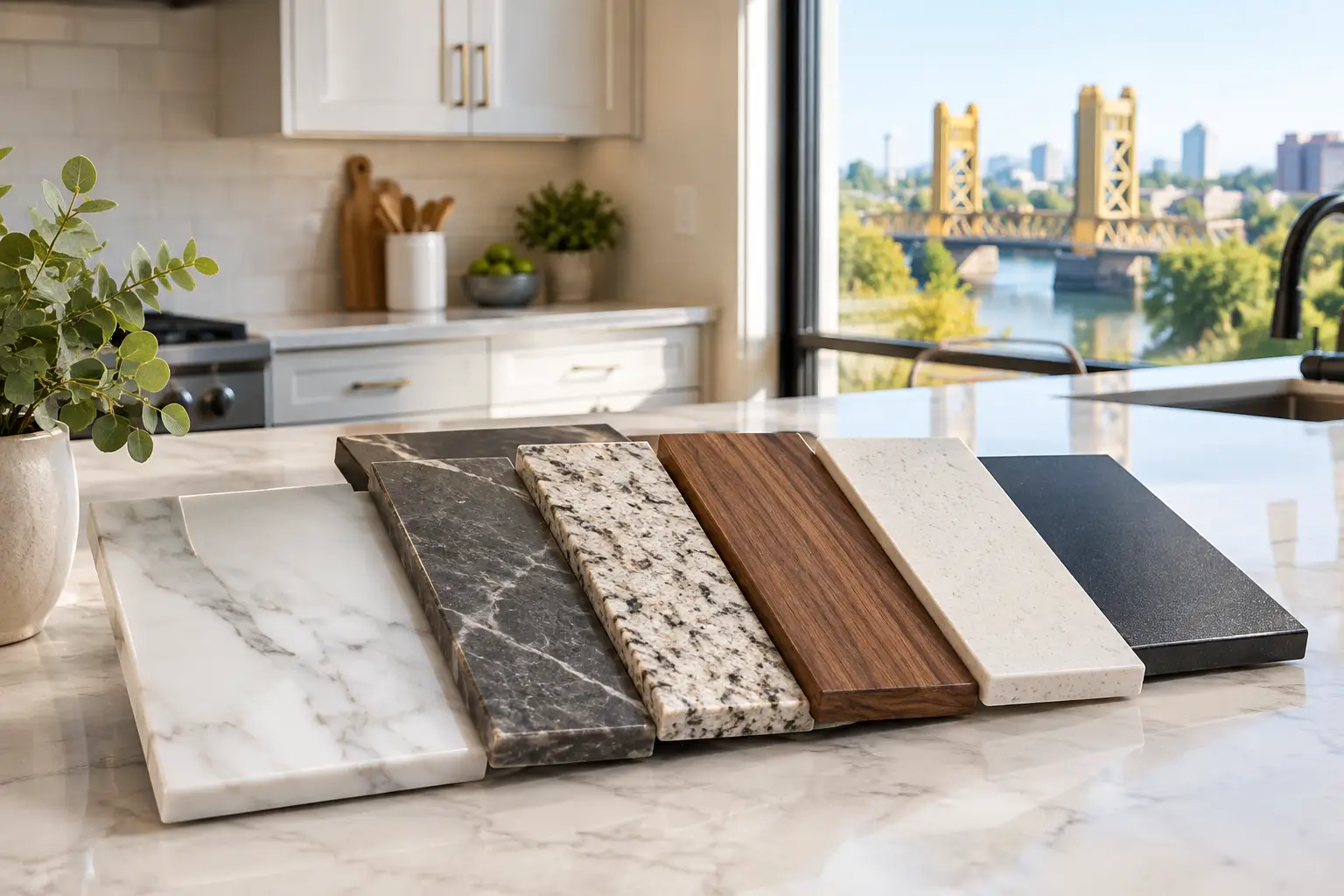
Quartz remains one of the most popular choices for kitchen renovations because it offers a consistent appearance with simple care. It is an engineered surface made from quartz particles and resin, available in colors and patterns ranging from clean white to convincing marble-style designs.
Its nonporous surface resists most common stains and does not need routine sealing. That makes quartz a practical fit for households that want a polished kitchen without adding another maintenance task. It also provides a broad selection of colors, which can make it easier to coordinate with cabinets, flooring, and paint.
The trade-off is cost. Quality quartz can be a significant investment, especially for larger kitchens or islands. It is also not indestructible. Use trivets for hot cookware, since extreme heat can damage the resin, and avoid cutting directly on the surface. For many homeowners, the ease of cleaning and dependable appearance justify the price.
Granite: Natural Character and Strong Performance
Granite brings natural movement and variation that manufactured materials cannot exactly duplicate. Every slab is different, so homeowners can choose a countertop with a one-of-a-kind pattern and color range. It is durable, heat resistant, and well suited to active kitchens.
Granite does require more attention than quartz. Depending on the specific slab and sealer, it may need periodic resealing to help protect against moisture and stains. Acidic liquids, oils, and dark-colored spills should be cleaned up promptly. The amount of care is manageable for many homeowners, but it is worth considering before committing.
Slab selection is an important part of a granite project. A small sample may not show the full pattern, veining, or color shifts present across an island or long run of cabinetry. Viewing the actual slab helps ensure the finished kitchen has the look you expect.
Laminate: Practical Value With Better Style Options
Laminate has changed considerably from the products many homeowners remember. Current options can imitate stone, wood, and concrete while providing a budget-friendly countertop solution. It is especially useful for a kitchen refresh, rental property, laundry room, or project where controlling costs is a priority.
Laminate is easy to clean and available in many colors and edge profiles. Installation is generally less complex than slab stone, which can also help keep the project more affordable. A well-chosen laminate can make an older kitchen look noticeably cleaner and more current.
Its limitations are worth understanding. Laminate can scratch, chip, or swell if water reaches seams or damaged edges. It is not the right place to set hot pans, and deep cuts are difficult to repair. It performs best when homeowners use cutting boards, trivets, and basic care around the sink area.
Solid Surface: Smooth and Repairable
Solid surface countertops provide a smooth, uniform look with no visible seams in many installations. Materials in this category are available in a wide range of colors and can include integrated sinks, creating a clean, continuous work area. They are a practical choice for homeowners who prefer a simple, understated finish.
Unlike some other countertop types, minor scratches or marks can often be repaired or refinished. That can be an advantage in a kitchen that sees regular use. Solid surface is nonporous, so it does not require sealing and is easy to keep clean.
The material is generally less heat resistant and more prone to scratching than quartz or granite. It works well for many kitchens, but it requires care with hot cookware and sharp knives. If your priority is a seamless look and repairability, it deserves serious consideration.
Butcher Block: Warmth With Ongoing Care
Wood countertops add warmth that stone and engineered surfaces cannot replicate. Butcher block can work beautifully on an island, baking station, coffee bar, or a section of countertop where you want a softer, more welcoming look. It also pairs naturally with painted cabinets and many traditional or modern kitchen styles.
Wood needs maintenance. It should be protected from standing water, especially around sinks, and may need periodic oiling or refinishing depending on the finish. It can dent, scratch, and show signs of use over time. Some homeowners love that lived-in character; others prefer a surface that stays more uniform.
Rather than using butcher block throughout the kitchen, many homeowners choose it as an accent material. Combining it with quartz or another durable main countertop can create visual interest while limiting maintenance in the busiest areas.
Porcelain Slab: Durable and Design-Forward
Porcelain slab countertops are gaining attention for their heat resistance, low water absorption, and ability to create dramatic stone-look surfaces. They can be a strong choice for homeowners who want marble-inspired movement without the care demands of natural marble. Porcelain also works well for matching backsplashes or waterfall island details.
Fabrication and installation require experienced handling because porcelain slabs can be thin and may chip if cut or transported incorrectly. Availability, slab size, edge options, and fabrication costs vary, so this material is best evaluated as part of a complete countertop estimate rather than by square-foot pricing alone.
For the right kitchen, porcelain offers a durable, modern finish. It is particularly appealing for homeowners who cook often and want a material that handles heat well while maintaining a clean, upscale appearance.
Choosing a Material That Fits Your Home
There is no single winner among the top countertop materials. Quartz is often the easy choice for low-maintenance family kitchens. Granite is a strong option for homeowners who value natural stone and are willing to maintain it. Laminate offers solid value when budget is the main concern, while solid surface provides a clean look and repairable finish. Butcher block adds warmth, and porcelain can deliver high-performance style for the right project.
It also helps to think beyond the countertop itself. White quartz may look very different next to warm oak cabinets than it does beside cool gray cabinetry. A dark granite can create a striking focal point, but it may make a small kitchen feel heavier if the room has limited natural light. Bringing cabinet doors, flooring samples, and backsplash choices together during planning leads to more confident decisions.
A professional measurement and consultation can clarify what will work with your existing layout, plumbing, appliances, and budget. DL Remodeling helps Sacramento-area homeowners coordinate countertops with cabinetry, flooring, backsplash, and the other connected details that make a kitchen feel finished. The most useful next step is to choose a few materials you like, then compare them against how your family cooks, cleans, and lives in the space every day.




Pingback: Quartz Versus Granite Countertops Compared - DL Remodeling
Pingback: Refacing Cabinets Versus Replacement: Which Is Right? - DL Remodeling