
A kitchen can look dated because of worn doors, faded finishes, and old hardware, even when the cabinet boxes still have years of life left. That is why homeowners often weigh refacing cabinets versus replacement before committing to a larger kitchen remodel. The right answer depends less on what looks good in a showroom and more on the condition of your existing cabinetry, the changes you want to make, and how your budget needs to work.
For some Sacramento homeowners, refacing provides a practical, lower-disruption update. For others, replacing the cabinets is the better long-term investment because the kitchen needs a new layout, more storage, or repairs beyond what a new surface can solve. A clear assessment at the start can prevent spending money on an update that does not meet your needs.
What Cabinet Refacing Actually Changes
Cabinet refacing keeps the existing cabinet boxes in place. The doors and drawer fronts are replaced, and the visible exterior surfaces of the cabinet frames receive a matching veneer or finish. New hinges, handles, and pulls are usually installed at the same time.
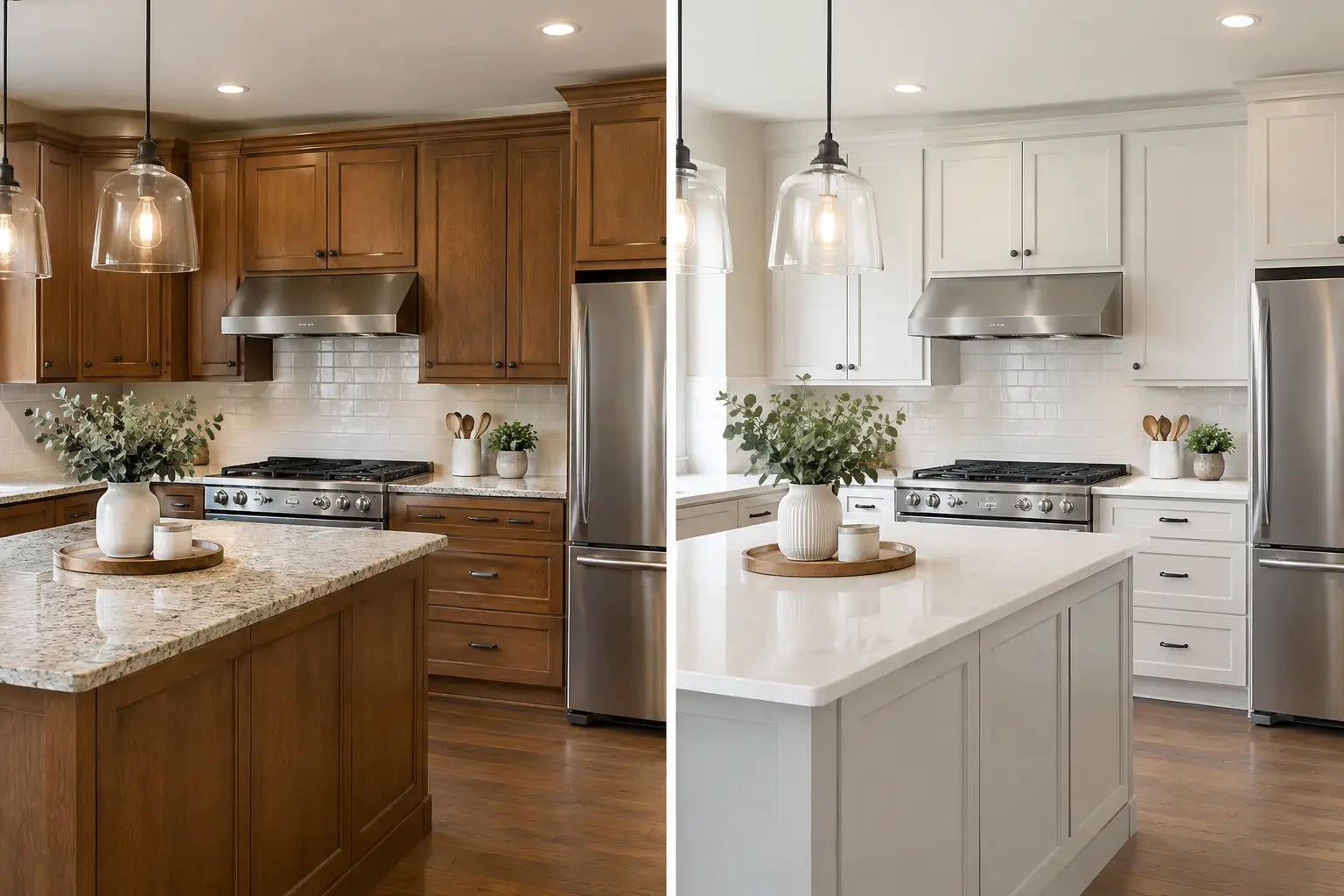
The result can be a major visual change. A kitchen with sound oak boxes and dated raised-panel doors, for example, can take on a cleaner, more current appearance with new shaker-style doors and updated hardware. Refacing may also be paired with a new countertop, backsplash, flooring, paint, and lighting, making the whole room feel significantly different without removing every cabinet.
What it does not do is change the basic footprint of the kitchen. The cabinet boxes remain where they are, and their size, depth, and internal construction largely stay the same. You may be able to make limited adjustments, but refacing is not designed to solve a poor layout or create substantial new storage.
What Full Cabinet Replacement Allows
Replacement means removing the existing cabinets and installing new ones. This approach gives you a blanker canvas for improving the kitchen’s function. You can relocate cabinets, adjust appliance placement, add an island, build a pantry, improve drawer storage, or change cabinet heights and depths where the space allows.
It is also the better choice when existing boxes have water damage, sagging shelves, loose joints, structural deterioration, or low-quality construction. Covering a weak cabinet box with an attractive new door does not correct the underlying problem.
A full replacement often connects to other work. Moving a sink or range may require plumbing, electrical, drywall, flooring, and countertop changes. That wider scope adds cost and planning, but it can be worthwhile when you are already making a long-term investment in the home.
Refacing Cabinets Versus Replacement: The Main Decision Points
The best option comes down to four practical questions: Are the existing cabinet boxes in good condition? Does the current kitchen layout work for your household? How much of the room do you want to update? And what budget range is comfortable for the project?
Start with the cabinet boxes
Refacing makes sense only if the cabinet boxes are solid, level, securely attached, and free from serious moisture damage. Open doors and drawers, look underneath the sink, and inspect the cabinet bottoms and interior corners. Soft particleboard, swollen material, mildew, or cabinets pulling away from the wall are warning signs that replacement may be the smarter route.
Older cabinets are not automatically poor candidates for refacing. In fact, some older homes have sturdy plywood cabinet boxes that are worth keeping. Condition matters more than age.
Consider how your kitchen works every day
If your kitchen feels crowded, has too little prep space, or forces family members to work around each other, new cabinet doors will not fix that frustration. Replacement offers the opportunity to improve traffic flow, add usable drawers, make room for a larger pantry, or create better storage for pots, small appliances, and everyday dishes.
On the other hand, if the sink, appliances, and work zones are already in practical locations, refacing can provide the visual update you want without opening up a larger construction project. This is common in kitchens with a functional layout but finishes that no longer match the homeowner’s style.
Compare the scope, not just the first price
Refacing usually costs less than replacing cabinets because it reuses the existing boxes and involves less demolition and installation. It can also reduce the amount of time your kitchen is out of service. However, the savings depend on the door style, materials, custom sizing, and any additional work included with the update.
Replacement carries a higher cost because it includes new cabinet construction, removal of old materials, installation, and often related upgrades. But price alone should not make the decision. If a refaced kitchen still leaves you with awkward storage, damaged boxes, or a layout you dislike, the lower initial cost can become an expensive compromise.
Ask for an estimate that clearly separates cabinetry from related work such as countertops, backsplash installation, plumbing changes, electrical updates, drywall repair, and painting. A complete scope helps you compare options honestly rather than comparing one partial number to another.
Think about the finish and customization you want
Refacing offers a good range of door styles, colors, and hardware choices. It can produce a polished look when completed carefully, especially for homeowners who want a straightforward refresh rather than a complete redesign.
New cabinets generally provide more flexibility. You can select deeper drawers, pull-out shelves, soft-close hardware, trash pullouts, pantry systems, appliance panels, and cabinets built around unusual dimensions. If storage is one of the main reasons you are remodeling, these details often make replacement more valuable over time.
When Refacing Is a Strong Choice
Refacing is often a good fit when cabinet boxes are structurally sound, the layout already serves the household, and the goal is to update the room’s appearance while controlling the project scope. It can be particularly practical for homeowners preparing to stay in the home for several years but who do not need to move walls, relocate appliances, or rebuild the kitchen from the ground up.
It may also work well when the project includes carefully chosen improvements around the cabinets. New counters, a backsplash, fresh wall color, updated lighting, and durable flooring can make refaced cabinets feel like part of a cohesive remodel rather than a stand-alone change.
The key is not to treat refacing as a shortcut for every kitchen. It is a targeted solution, and it performs best when the structure behind the new finish is worth preserving.
When Cabinet Replacement Is Worth It
Replacement is usually the better path if cabinets are damaged, poorly built, or no longer functional for the way your family uses the kitchen. It is also the right choice if you plan to change the layout, add storage, remove a wall, install an island, or update appliances with different size requirements.
Homeowners who expect to remain in their house for many years may find that replacement delivers greater day-to-day value. Better drawer organization, accessible storage, quality hardware, and a layout that makes cooking easier can matter more than the initial cost difference.
A larger remodel requires more coordination, but working with one licensed local contractor can simplify the process. At DL Remodeling, the goal is to help homeowners understand the full scope before work begins, including the connected trades that can affect budget, schedule, and the finished result.
Plan Before You Choose
Before deciding, make a short list of what bothers you about your current kitchen. Separate appearance concerns from functional problems. Dated door styles, worn finish, and old hardware point toward refacing if the boxes are sound. Lack of storage, water damage, and an inefficient layout point more strongly toward replacement.
A professional on-site evaluation is especially useful because cabinet condition is not always obvious from the outside. It also gives you a chance to discuss countertop heights, appliance clearances, flooring transitions, plumbing locations, and the other details that shape a successful kitchen project.
The best kitchen investment is the one that fits the house, supports your daily routine, and gives you confidence in the work behind the finished surfaces. Start with an honest look at what your existing cabinets can still do, then choose the level of remodeling that will serve your home well for years to come.







Pingback: Best Home Upgrades for Resale That Pay Off - DL Remodeling