
A worn carpet seam, peeling vinyl, or several mismatched floor types can make an otherwise well-kept home feel dated the moment a buyer walks in. Homeowners often ask which flooring increases home value because flooring affects nearly every room at once: appearance, daily maintenance, durability, and the perceived condition of the home.
For Sacramento homeowners, the best answer is usually not the most expensive material. It is the flooring that suits the house, performs well in the room, and is installed with clean, consistent workmanship. Hardwood remains the strongest value signal in many homes, but engineered wood, porcelain tile, and quality luxury vinyl can be smarter investments in the right areas.
Which Flooring Increases Home Value in Sacramento?
Real hardwood flooring generally has the highest potential to increase a home’s appeal and resale value. Buyers recognize it as a durable, long-term material, and many like that solid wood can be refinished instead of replaced. Hardwood also creates a continuous, finished look when used across living rooms, hallways, dining rooms, and bedrooms.
That does not mean every Sacramento home needs solid hardwood from wall to wall. A floor should match the home’s price range, style, and layout. Installing a premium material in one room while leaving adjoining spaces outdated can make the improvement feel incomplete. In a modest home, a well-installed engineered wood or luxury vinyl plank floor may deliver a better return than a costly hardwood product that stretches the budget too far.
The goal is to make the home feel cared for, functional, and easy to move into. Buyers often respond more strongly to clean, cohesive flooring than to an expensive material chosen without regard for the rest of the home.
Hardwood: The Classic Choice for Long-Term Value
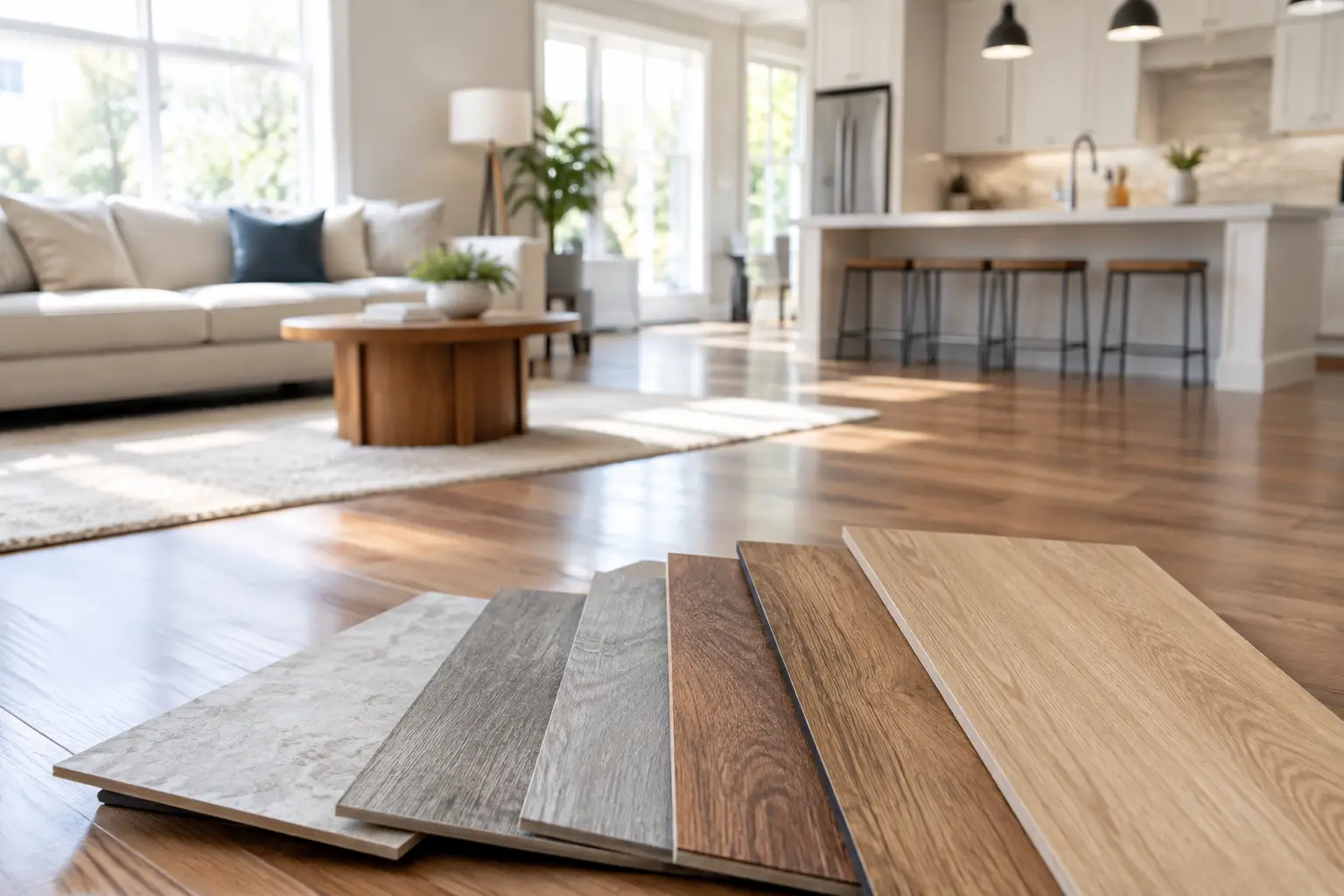
Solid hardwood is a strong choice for dry, main living areas. Oak, maple, and hickory are familiar options that appeal to a broad range of buyers. Neutral wood tones tend to hold up better than very dark stains or highly trendy finishes because they work with more furniture styles and paint colors.
Hardwood’s advantage is longevity. With proper care, it can last for decades and be sanded and refinished when the surface shows wear. That durability gives buyers confidence that they are not immediately inheriting a major replacement project.
Still, hardwood has trade-offs. It costs more to install than many alternatives, and it is not the best fit for bathrooms, laundry rooms, or other areas where standing water is possible. Natural wood can also scratch and dent, especially in busy households with large dogs or active children. A quality finish helps, but homeowners should choose hardwood because it fits their lifestyle as well as their resale plans.
When engineered wood makes more sense
Engineered hardwood has a real wood surface over a stable core. It provides much of the appearance buyers want from hardwood, often at a more manageable price point. Its construction can also handle changes in indoor humidity better than solid planks, which makes it a practical choice for many Northern California homes.
Not all engineered flooring is equal. A thicker wear layer usually offers better long-term performance and may allow refinishing, while very thin products have a shorter useful life. For resale, choose a reputable product with a natural-looking finish and professional installation. Poorly fitted boards, hollow spots, or uneven transitions can take away from the value of even a good material.
Porcelain Tile Adds Value Where Water Is a Concern
Porcelain tile is one of the best flooring investments for bathrooms, entryways, kitchens, and laundry rooms. It handles moisture well, resists scratches, and is easy to clean. In Sacramento homes, tile is also a sensible option for areas that see dirt, wet shoes, pets, and frequent daily traffic.
Large-format porcelain tiles and wood-look tile can create a clean, updated appearance without the maintenance concerns of natural wood. For bathrooms, a properly installed tile floor can make the room feel more permanent and finished, especially when paired with an updated shower, vanity, or lighting.
Installation matters greatly with tile. Subfloor preparation, layout, grout spacing, and transitions all affect the final result. Cracked tiles or uneven surfaces can be expensive to correct later. A licensed remodeling contractor can inspect the existing floor and address needed preparation before new tile goes in.
Natural stone can also be attractive, but it is not automatically the best return on investment. Stone often requires more maintenance, sealing, and careful cleaning. Porcelain provides a similar high-end look for many homeowners while keeping upkeep simpler.
Luxury Vinyl Plank Delivers Practical, Broad Appeal
Luxury vinyl plank, often called LVP, has become a popular option because it is water-resistant, durable, and available in a wide range of wood-look styles. A good-quality product can be an excellent choice for families who want one consistent floor through busy living spaces, bedrooms, kitchens, and hallways.
LVP will not usually carry the same premium perception as real hardwood, but it can still increase home value when it replaces worn carpet, old sheet vinyl, or several clashing floor types. For a home that needs a major visual refresh on a defined budget, that improvement can be significant.
The key is choosing quality rather than simply choosing the lowest price. Better LVP has a more realistic texture, stronger wear layer, and sturdier locking system. Avoid overly glossy finishes, artificial gray tones, or patterns that repeat too obviously. A neutral, warm wood look is generally easier for future buyers to picture in their own home.
LVP is especially practical when pets, children, and frequent spills are part of everyday life. It is not indestructible, and heavy furniture or sharp objects can still damage it, but it offers a useful balance of cost, appearance, and maintenance.
Carpet Has a Place, but Usually Not the Highest Return
Carpet remains comfortable in bedrooms and can help make a home feel warmer and quieter. Fresh, neutral carpet in good condition is far better for resale than stained, worn, or strongly colored carpet. However, carpet generally does not add as much perceived value as hard-surface flooring in main areas.
If hardwood or a quality hard surface already exists beneath old carpet, restoring it may be the more valuable choice. If new carpet is needed, choose a durable neutral shade and quality padding. Buyers should see it as clean and move-in ready, not as something they will need to replace after closing.
Match the Flooring to the Room and the Home
The highest-value flooring plan is usually a coordinated one. Living areas and hallways benefit from continuity, while bathrooms and laundry rooms need moisture-resistant materials. Bedrooms can be finished with the same hard surface as the rest of the home or with fresh neutral carpet, depending on the home’s style and buyer expectations.
Before selecting a material, consider the condition of the subfloor, the height difference between rooms, baseboards, doors, and nearby finishes. Flooring work often connects to painting, drywall repair, cabinetry, or bathroom remodeling. Planning these details together helps prevent awkward transitions and last-minute costs.
For homeowners preparing to sell soon, focus on visible problems first. Replace damaged flooring, remove dated materials, and aim for consistency. For homeowners staying longer, choose a floor you will enjoy maintaining every day. The best renovation is one that improves your home now without making a future buyer question the choices.
Workmanship Protects the Value of Your Investment
Even the right flooring can lose its impact if the installation is rushed. Straight layouts, secure subfloor preparation, clean cuts around doorways, level transitions, and properly finished baseboards all contribute to a professional result. These details are what make a floor look like a lasting part of the home instead of a quick cosmetic update.
At DL Remodeling, we help Sacramento-area homeowners look at the full scope of a flooring project, from the existing surface and needed repairs to the adjoining rooms and final finish work. Clear communication before work begins helps keep the project on schedule, within the agreed budget, and as clean as possible while your household is still living in the home.
A new floor should make your home easier to enjoy and easier for the next owner to appreciate. Choose a material that fits the room, invest in proper preparation, and favor timeless, well-installed finishes over a trend that may feel dated in a few years.