
A backsplash has a tougher job than many homeowners realize. It protects the wall behind the range and sink from water, grease, and everyday cooking messes, but it also sets the visual tone for the whole kitchen. The best materials for kitchen backsplashes are the ones that fit how your family uses the space, work with your countertops and cabinets, and remain practical to clean years after installation.
For Sacramento-area homeowners, the right choice often comes down to balancing appearance, maintenance, budget, and the scope of the remodel. A small backsplash update can refresh an existing kitchen. During a larger kitchen renovation, it should be selected alongside the countertop, cabinetry, lighting, and paint so the finished room feels intentional rather than pieced together.
How to Choose Kitchen Backsplash Materials
Start with the area that needs protection. A backsplash that runs only a few inches above the counter has a different impact and budget than one that extends from the countertop to the cabinets or ceiling. Behind a cooktop, a durable and easy-to-clean surface is especially valuable. Behind a sink, stain resistance and well-finished grout lines matter just as much.
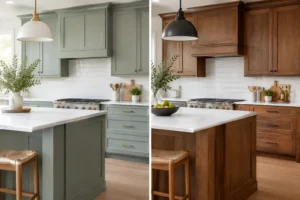
Your countertop is another deciding factor. A heavily patterned granite or quartz countertop often looks best with a quieter backsplash. If the countertop is a simple solid color, the backsplash can provide more pattern, texture, or contrast. Cabinet color also changes the equation. White cabinets leave room for nearly any material, while warm wood or dark-painted cabinetry may call for a backsplash with a more carefully matched undertone.
Maintenance deserves an honest look before making a final selection. Some natural materials require periodic sealing. Tile may be simple to wash, but grout can need more attention than a large-format slab. There is no single right answer, but homeowners should choose a surface they will be comfortable caring for over time.
Best Materials for Kitchen Backsplashes
Ceramic and Porcelain Tile
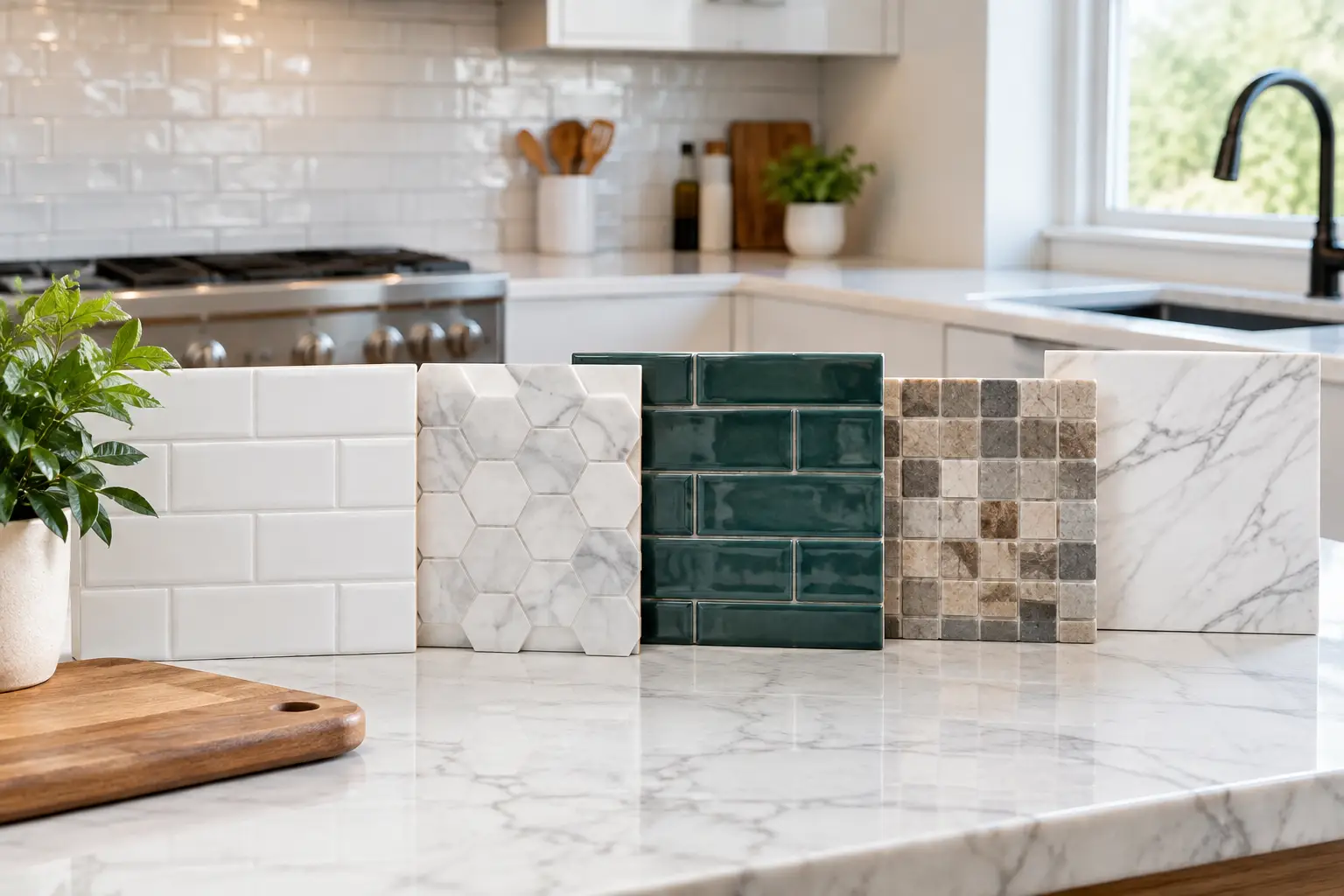
Ceramic and porcelain tile remain popular for good reason. They are widely available, durable, water-resistant, and offered in a range of colors, sizes, and finishes. From classic subway tile to large-format panels and handmade-look designs, tile can suit traditional, transitional, or modern kitchens without forcing the entire project into one specific style.
Porcelain is generally denser and less absorbent than ceramic, making it an especially practical option around sinks and cooktops. Both can provide good value, although the final cost depends on the tile itself, the layout, the amount of cutting required, and the grout selected. A simple running-bond pattern typically costs less to install than a detailed herringbone or mosaic design.
The trade-off is grout. Light grout can brighten a kitchen but may show cooking splatters more easily. Dark grout is more forgiving but can create a stronger grid pattern. Using a quality grout and keeping it properly sealed when needed helps reduce staining and makes regular cleaning easier.
Quartz Slabs
A quartz backsplash creates a clean, continuous look, particularly when it matches the countertop. Because quartz comes in large slabs, it has few or no grout lines to clean. That makes it a strong choice for homeowners who want a low-maintenance kitchen with a polished finish.
Quartz is nonporous, so it does not generally require sealing. It holds up well against everyday splashes and wipes clean easily with mild soap and water. It is also available in colors and patterns that range from subtle white and gray to warmer stone-inspired looks.
The main consideration is cost. Using countertop material on the walls can increase the overall budget, especially with tall backsplash runs or material with prominent veining that must be carefully aligned. Quartz also needs professional templating, fabrication, and installation. Still, for a full kitchen remodel, the finished result can be worth the investment because it ties the work areas together neatly.
Natural Stone
Natural stone backsplashes bring variation that manufactured materials cannot fully duplicate. Marble, travertine, slate, and granite each have their own movement, texture, and color range. A stone backsplash can add warmth to a kitchen with painted cabinets or create a more traditional look alongside wood cabinetry.
Marble is a favorite for its classic appearance, but it is more porous and can etch or stain if not cared for properly. Travertine also needs sealing and may have natural pits that some homeowners love and others find difficult to maintain. Granite tends to be more durable, while slate offers deep color and texture but should be evaluated carefully for the specific finish and maintenance requirements.
Natural stone works best for homeowners who appreciate natural variation and are willing to follow the recommended care routine. If an exact, uniform color is the goal, porcelain or quartz may be the better fit.
Glass Tile
Glass tile reflects light, making it useful in kitchens that feel dark or compact. It can add a bright, clean accent behind the counter without overwhelming the room. Glass is available in mosaic sheets, subway tile shapes, and larger contemporary pieces, with options ranging from clear and glossy to frosted and colored.
Its smooth surface is easy to wipe down, but glass can show fingerprints and water spots more readily than a matte material. Installation also requires care because the wall surface and adhesive can sometimes show through translucent tile. This is a material where proper preparation and clean workmanship make a visible difference.
Glass is often most effective as a focused design feature rather than a choice made solely for durability. It can be a good match for a homeowner who wants extra light and color in an otherwise simple kitchen.
Stainless Steel
Stainless steel is a hardworking backsplash material, especially behind a range. It is nonporous, heat-resistant, and easy to wipe clean after cooking. It naturally pairs well with stainless appliances and fits kitchens with a contemporary, industrial, or professional-inspired look.
A stainless backsplash does have limits. It can show smudges, scratches, and water marks, particularly in busy family kitchens. Brushed finishes tend to hide these marks better than highly polished surfaces. Many homeowners use stainless steel only behind the cooking area and choose tile or another material for the remaining walls.
Solid-Surface Materials
Solid-surface panels can provide the clean look of a slab backsplash at a more controlled price point than some stone products. They offer minimal seams, straightforward cleaning, and a wide selection of colors. Depending on the product, they can also be fabricated with coved transitions or integrated details that reduce places where grime can collect.
These materials are practical for simple, low-maintenance kitchens, but they are not all equally heat-resistant. The area directly behind a range should be planned according to the manufacturer’s requirements and local installation standards. A qualified remodeling contractor can help determine whether the material is suitable for each section of the kitchen.
Matching Material to Your Remodeling Priorities
If easy maintenance is the top priority, quartz, porcelain tile, and solid-surface materials are usually strong choices. If character and natural variation matter most, stone may be worth the added care. For a tighter budget, ceramic tile can deliver a durable finished look without sacrificing style. Homeowners who want a high-end, continuous appearance often choose a quartz slab that coordinates with the countertop.
It also helps to think beyond the material sample. Ask to see the actual tile layout, slab section, grout color, edge finish, and outlet placement before work begins. A backsplash can look very different once it is installed across several walls under your kitchen lighting. Planning those details early helps avoid unnecessary changes during construction.
Installation Details That Protect the Finished Look
Even the right material can disappoint if the installation is rushed. Walls need to be properly prepared and reasonably flat so tile lines stay consistent and slab materials sit correctly. Outlet covers, under-cabinet lighting, range hoods, and countertop seams should all be considered before backsplash work starts.
For tile, clean cuts and evenly spaced joints give the installation a professional appearance. For slabs, careful measuring and fabrication help minimize visible seams. Caulk should be used where the backsplash meets the countertop or cabinets, allowing for normal movement and helping keep moisture out of the wall.
A clean jobsite matters here too. Backsplash installation often involves cutting, drilling, and detailed finishing work in the center of the home. Coordinating the work with countertops, cabinets, electrical updates, drywall repair, and painting keeps the project moving in the right order and helps protect completed surfaces.
The best backsplash is not necessarily the most expensive one. It is the material that makes daily cooking and cleanup easier while fitting the home you already have and the budget you want to keep. If you are planning a kitchen update in Sacramento or a nearby Northern California community, a careful in-home consultation can help turn a few samples into a choice that will look right for years.