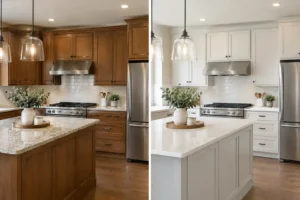


A kitchen can feel dated because of worn cabinet doors, poor storage, or an awkward layout, even when the countertops still look great. So, can you replace kitchen cabinets and keep countertops? Often, yes. But it is not a simple cabinet swap. Protecting an existing countertop requires careful measuring, thoughtful planning, and an honest look at the condition of both the cabinets and the countertop.
For Sacramento homeowners trying to control the cost of a kitchen update, keeping a quality countertop can make sense. The right approach depends on the countertop material, how it was installed, whether the new cabinets will fit the existing layout, and whether the countertop has enough life left to justify the extra care.
When You Can Replace Kitchen Cabinets and Keep Countertops
The best-case scenario is a countertop that is in good condition, installed over standard base cabinets, and staying in the same kitchen footprint. If the sink, range, dishwasher, and cabinet runs are not moving, a contractor may be able to remove the old cabinets while supporting the countertop and then install new cabinets beneath it.
This is most realistic with durable, separate countertop sections. Natural stone, quartz, solid-surface materials, and some laminate tops can sometimes be preserved. The word sometimes matters. A countertop may look strong from above but have weak seams, unsupported overhangs, or hidden damage near the sink cutout.
Keeping the same cabinet layout also makes the work more predictable. New cabinets must match the old cabinet heights, depths, and wall locations closely enough for the countertop, backsplash, appliances, and plumbing connections to continue working together. Even a small difference in floor level or cabinet height can create problems with a countertop that was cut for the original installation.
Why This Project Requires More Care Than It Seems
Countertops are normally installed after the base cabinets are leveled, secured, and checked for a straight, flat surface. Replacing cabinets reverses that sequence. The countertop has to be protected while the support underneath it is removed and rebuilt.
That creates risk at the most vulnerable points: seams, corners, sink openings, cooktop cutouts, and extended breakfast-bar overhangs. Stone and quartz are heavy and can crack if they flex. Tile can loosen or fracture when moved. Laminate can chip, delaminate, or break where it meets the wall or backsplash.
A countertop can also be tied into the kitchen more tightly than homeowners expect. Caulk may connect it to the backsplash. The sink may be clipped or adhered to the countertop. Plumbing, garbage disposal connections, and dishwasher brackets all need to be disconnected and reinstalled correctly. If a backsplash rests on the countertop, it may need repair after the cabinets come out.
This is why an experienced remodeling contractor should inspect the kitchen before promising that the countertop can stay. The decision should be based on the actual installation, not only on the countertop’s appearance.
Countertop Materials and What to Expect
Quartz and natural stone
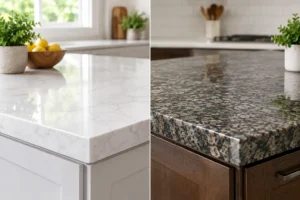
Quartz, granite, and marble can often be kept, but they require the most careful handling. These materials are heavy, and their weight must be supported evenly at all times. In some kitchens, the countertop can remain in place on temporary supports while old cabinets are removed one section at a time. In others, it needs to be lifted and stored safely before new cabinets go in.
Either method carries risk. Seams can separate, veined stone can crack, and a large slab may not survive removal. If a countertop is already cracked, has a weak seam, or includes a long unsupported overhang, replacing it with the cabinets may be the wiser investment.
Laminate countertops
Laminate is lighter and generally less expensive to replace, which changes the cost-benefit calculation. It can sometimes stay in place, especially if it is a separate section with no tile backsplash attached. Still, laminate edges and backsplashes can be damaged during removal, and older tops may not be worth the labor required to preserve them.
Tile countertops
Tile is usually the least practical material to save. Individual tiles and grout joints do not handle movement well. If the countertop has sentimental value or is in excellent condition, preservation may be possible, but homeowners should plan for a greater chance of repair work.
Solid-surface and butcher-block tops
Solid-surface countertops can be more forgiving than stone because minor damage may be repairable. Butcher block is lighter and can often be removed and reinstalled, though it may need refinishing afterward. Both still need a careful evaluation of seams, fasteners, and the condition of the material around the sink.
The Cabinet Details That Must Match
New cabinets are not always the exact dimensions of the old ones, even when they appear similar. A standard base cabinet is typically 34 1/2 inches high before the countertop is installed, but floors are rarely perfectly level. Existing cabinets may have been shimmed, modified, or built around uneven walls decades ago.
Before cabinet ordering begins, the contractor should verify cabinet height, depth, wall length, countertop overhang, appliance openings, and the location of plumbing and electrical connections. The new cabinets must be leveled precisely to support the countertop without putting pressure in one area.
Door and drawer clearance also matter. A new cabinet style may have wider doors, deeper drawers, or different hardware placement. If the existing countertop has a narrow overhang, a new door profile could rub against it. Details like these are easy to miss in a quick estimate and expensive to correct after installation.
When Keeping the Countertops Is Not the Best Choice
Sometimes saving the countertop costs more in labor, risk, and limitations than replacing it. This is especially true when you want to change the kitchen layout, add an island, move the sink, upgrade appliances, or improve the flow between cooking and dining areas.
It may also be better to replace the countertop if it is visibly worn, stained, cracked, or nearing the end of its useful life. Installing beautiful new cabinets beneath an outdated countertop can leave the kitchen feeling unfinished. You may save money now but face another disruptive project in a few years.
A full replacement also gives you more flexibility with cabinet sizes, backsplash design, sink style, and countertop overhangs. For homeowners planning to stay in the home for many years, completing the cabinetry and countertop together can provide a cleaner result and avoid designing around old measurements.
How to Plan the Project Carefully
Start with a site visit and a clear conversation about what you want to preserve, what you want to change, and what budget range feels comfortable. A contractor should inspect the countertop, cabinets, floor, walls, backsplash, and appliance connections before presenting options.
Ask whether the countertop can remain in place or must be removed temporarily. You should also ask what happens if damage occurs during removal, whether repairs are possible, and whether the project price includes plumbing, electrical, drywall, paint, flooring touch-ups, and backsplash work. Those connected details are often where a kitchen project expands.
It is also smart to have a backup plan. If an older countertop cracks during careful removal, you do not want the entire project to stop while you decide what to do next. Selecting a replacement material in advance, even if it is only a contingency, can keep the schedule moving.
A Practical Choice for the Right Kitchen
Replacing cabinets while keeping countertops is a practical option when the existing tops are in excellent condition, the layout is staying put, and the cabinets can be rebuilt to provide the right support. It is not a shortcut that works in every home, but it can reduce waste and help focus the budget on better storage, durable cabinetry, and the improvements your family will use every day.
A careful inspection is the best first step. With clear expectations and clean, precise workmanship, homeowners can make a confident decision about whether preserving the countertop truly serves the kitchen they want to create.