
A kitchen can feel dated long before it stops working. Worn cabinet doors, faded finishes, and limited storage often lead homeowners to weigh refacing versus replacing kitchen cabinets. Both options can make a major visual difference, but they solve different problems. The best choice depends on what is behind the doors, how you use the room, and what you want the kitchen to do for your family in the years ahead.
For Sacramento homeowners, this decision is often part of a larger plan. You may be preparing for new countertops, replacing flooring, improving lighting, or finally creating a kitchen that works better for busy mornings and family meals. Starting with an honest look at your existing cabinets helps keep the project on budget and avoids paying for work that does not address the real issue.
What Cabinet Refacing Actually Changes
Cabinet refacing keeps the existing cabinet boxes in place. The visible exterior surfaces are covered with new veneer or laminate, and the old doors and drawer fronts are replaced. New hardware is usually added at the same time, which can give the kitchen a cleaner, more current look.
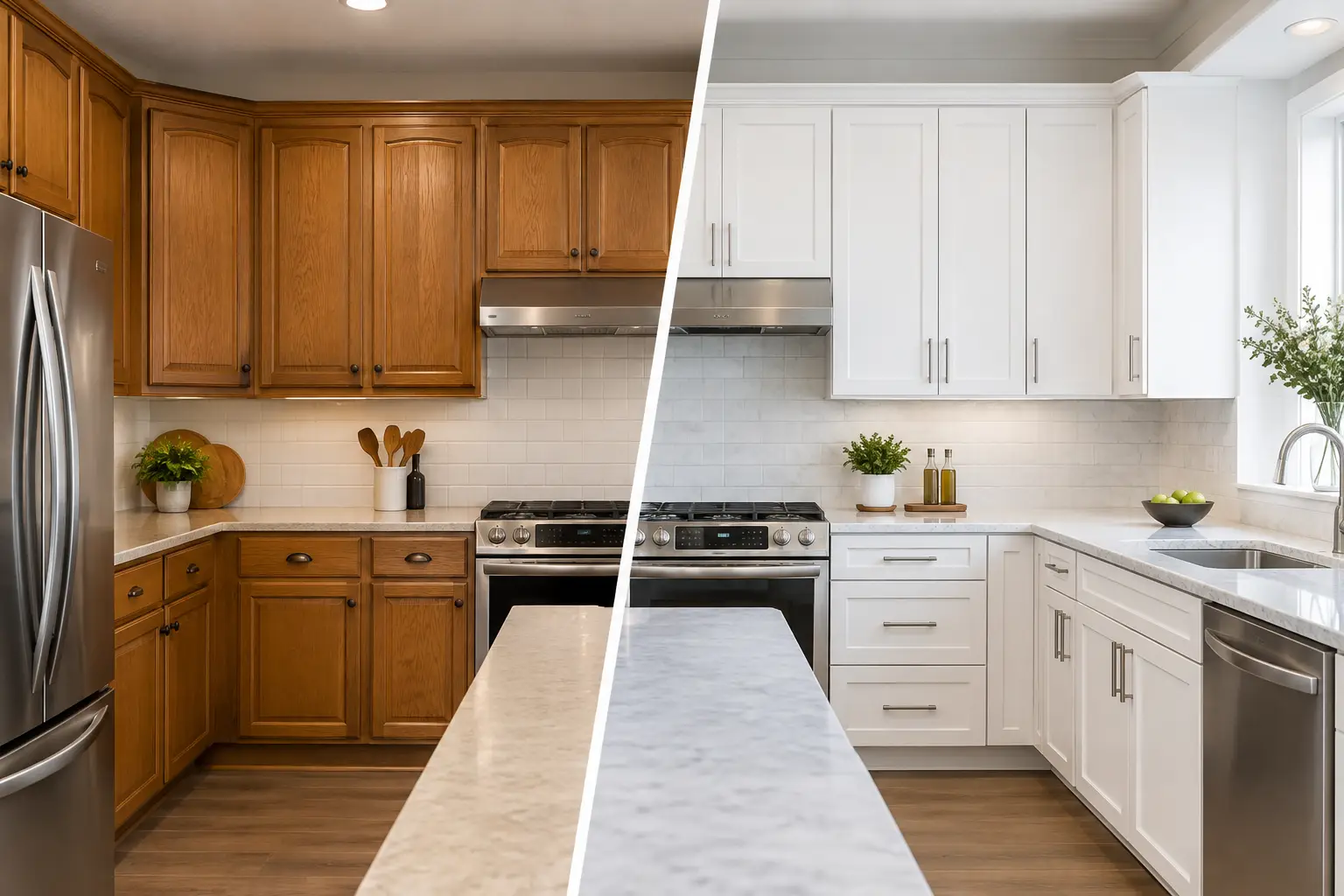
Refacing is not the same as painting cabinets. Painting changes the finish on existing doors and boxes. Refacing replaces the doors and drawer fronts altogether, allowing homeowners to choose a different door style, finish, or color while retaining the basic cabinet layout.
This approach works best when the cabinet boxes are solid, level, and in good condition. If the hinges close properly, the shelves are stable, and there is no major water damage or warping, refacing can provide a meaningful update without removing the entire kitchen.
When Refacing Makes Sense
Refacing is often a practical choice when you like your current kitchen layout. If the sink, range, refrigerator, and work areas are where they need to be, there may be no reason to tear out functional cabinetry simply because it looks old.
It can also be a good fit when the goal is cosmetic improvement. Changing from dated oak doors to a simple shaker style, for example, can make a kitchen feel far more current. New pulls, soft-close hardware, and a coordinated countertop can complete the change without the cost and disruption of a full cabinet replacement.
Because the cabinet boxes remain, refacing usually involves less demolition and fewer days without a working kitchen. That matters for families who need to keep daily routines moving during construction. It also creates less construction waste than removing usable cabinets.
When Replacing Kitchen Cabinets Is the Better Investment
Replacing cabinets means removing the existing boxes, doors, drawers, and hardware and installing entirely new cabinetry. It costs more than refacing in most cases, but it gives you freedom to change the kitchen’s layout, storage, cabinet sizes, and overall function.
Replacement is the stronger choice when existing cabinets have structural problems. Cabinet boxes that are sagging, swollen from water exposure, heavily damaged, or poorly installed should not simply be covered up. A fresh door front cannot correct a weak cabinet box or a drawer that no longer operates properly.
Replacement is also worth considering when your kitchen has practical limitations that bother you every day. Maybe there is not enough pantry space, the corner cabinets waste usable room, or the current drawers are too shallow for cookware. New cabinets allow for pull-out shelves, deeper drawers, built-in trash storage, appliance garages, and other features designed around how your household actually uses the room.
Layout Changes Require New Cabinets
If you plan to move walls, relocate appliances, add an island, or significantly rework plumbing and electrical locations, full replacement is usually the logical path. Refacing follows the existing cabinet footprint. It cannot turn a cramped galley kitchen into an open, better-organized space.
This is especially true in older homes, where a kitchen may have been built for a different era of cooking and storage. A full renovation can address cabinet placement along with lighting, flooring, drywall repair, electrical upgrades, and countertop installation. Handling connected work under one clear scope helps prevent avoidable delays and mismatched finishes.
Refacing Versus Replacing Kitchen Cabinets: Cost and Value
Cost is a major factor in the decision, but the lowest initial price is not always the best value. Refacing typically costs less because much of the existing cabinetry stays in place. There is less demolition, less material, and less labor involved than a full cabinet replacement.
That savings can make room in the budget for other high-impact improvements, such as new countertops, a backsplash, under-cabinet lighting, or durable kitchen flooring. For a kitchen with good bones, this can be a smart way to improve appearance without overbuilding the project.
Replacing cabinets requires a larger investment because it includes new cabinet boxes, installation, removal of old materials, and often related work. Once cabinets are removed, homeowners may also decide to address old flooring, wall damage, outlets, plumbing connections, or lighting that was previously hidden.
Still, replacement may provide better long-term value when the old cabinets are failing or no longer serve the household. Paying to reface weak or poorly configured cabinets can lead to regret if you later need to replace them anyway. The right question is not simply, “Which option costs less?” It is, “Which option solves the problems I have without creating new ones a few years from now?”
Questions to Ask Before Making a Decision
A close inspection can reveal whether refacing is realistic. Open every cabinet and drawer. Look for water stains beneath the sink, soft or swollen particleboard, separating joints, sagging shelves, and doors that will not stay aligned. Check whether the boxes are securely attached and whether the cabinet interiors still meet your storage needs.
Then consider the layout. Think about the path between the refrigerator, sink, and cooktop, but also pay attention to ordinary tasks. Is there enough landing space beside the range? Can two people work in the kitchen comfortably? Do you have a place for small appliances, trash, recycling, and pantry items? A beautiful cabinet finish will not fix a frustrating kitchen workflow.
It also helps to think ahead. If you expect to stay in the home for many years, functional upgrades may be worth a larger investment. If you are updating a well-maintained kitchen before selling, refacing may create the polished appearance you want while keeping spending under control. Every home and budget is different, so a site visit and clear project scope are more useful than a one-size-fits-all answer.
Plan the Rest of the Kitchen Around the Cabinet Choice
Cabinets affect nearly every surface in the kitchen. Before choosing door styles or finishes, decide whether you will keep or replace countertops, backsplash tile, flooring, and appliances. A refacing project may require careful measurements to fit a new countertop cleanly against the refreshed cabinet faces. A replacement project offers more flexibility, but it also requires better coordination.
This is where clean workmanship and communication matter. Cabinet installation is only one part of a finished kitchen. Walls may need repair, floors may need patching, and plumbing or electrical details may need adjustment. Working with a licensed contractor who can plan the connected pieces helps keep the project organized and the jobsite clean.
DL Remodeling helps Sacramento-area homeowners evaluate whether an update calls for a focused cabinet refresh or a more complete kitchen renovation. The goal is not to sell more work than you need. It is to create a kitchen that looks right, functions well, and fits the agreed budget and schedule.
The cabinet decision is easier when you focus on the problem you want to solve. If your cabinets are sturdy and the layout works, refacing can give the room a fresh start. If the boxes are damaged or the kitchen no longer supports the way your family lives, replacement gives you the opportunity to build a better everyday space.