
A bathroom can look dated long before anything is technically broken. A cramped vanity, weak lighting, worn flooring, and a tub that nobody uses can make a daily routine harder than it needs to be. The most useful emerging bathroom design trends are not about chasing a showroom look. They are about building a room that works better for the people who use it, holds up to regular cleaning, and fits the home’s budget.
For Sacramento homeowners, the strongest bathroom updates combine practical storage, low-maintenance materials, comfortable lighting, and layouts that make sense for everyday life. A trend is worth considering when it improves the room without creating a costly maintenance problem a few years later.
1. Curbless Showers With Practical Planning
Curbless showers remain one of the most requested bathroom upgrades, and for good reason. Removing the raised threshold creates a cleaner visual line and makes the shower easier to enter. This can be especially helpful for homeowners planning to age in place, families with young children, or anyone who simply wants less to step around during a busy morning.
The design only works well when the construction details are handled correctly. The shower floor needs proper slope toward the drain, reliable waterproofing below the tile, and materials with enough texture to reduce slipping. A large-format tile can look clean and modern, but smaller tile or a mosaic may provide better traction on a shower floor.
A curbless shower is not automatically the best choice for every bathroom. Existing floor framing, plumbing locations, and the available slope can affect cost and feasibility. A professional assessment before choosing finishes helps prevent a design decision from becoming an expensive surprise during construction.
2. Larger Showers Replacing Underused Tubs
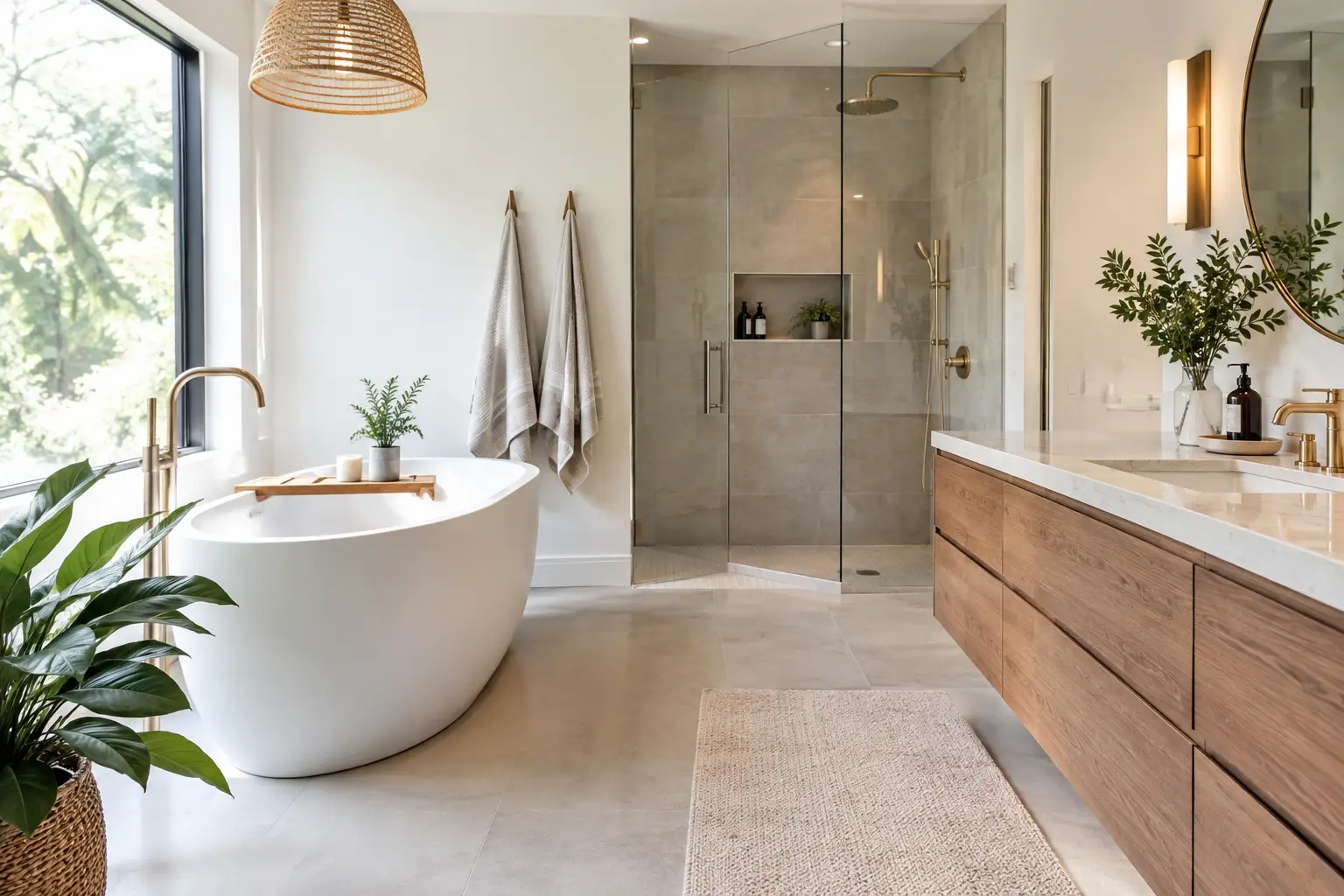
Many homeowners are choosing to replace a seldom-used tub with a larger walk-in shower. This trend is less about making a bathroom feel trendy and more about using square footage wisely. A spacious shower with a built-in bench, handheld showerhead, wall niche, and easy-to-reach controls can make the room feel more comfortable every day.
There is one major consideration: keeping at least one bathtub in the home can be helpful for families with small children and may appeal to some future buyers. If the house has multiple bathrooms, converting a secondary bath can be a sensible choice while preserving a tub elsewhere. In a one-bathroom home, the decision deserves more thought.
Clear glass panels are still popular because they make a shower feel open. However, they do show water spots and require regular cleaning. Some homeowners prefer a partial glass panel, textured glass, or a layout that limits how much glass is needed. The right option depends on both the look you want and the upkeep you are willing to handle.
3. Warm Wood Tones and Natural-Looking Finishes
Cool gray bathrooms had a long run. Current bathroom design is moving toward warmer, more inviting combinations: light oak-look vanities, soft beige tile, muted clay tones, warm white walls, and brushed metal fixtures. These colors work well in Northern California homes because they can feel updated without looking overly formal or temporary.
Natural-looking finishes do not have to mean high-maintenance materials. Porcelain tile that resembles stone, wood, or concrete can provide the look homeowners want while standing up better to moisture and cleaning. Quality luxury vinyl flooring can also be a practical option in some bathroom renovations, particularly when budget and comfort underfoot are priorities.
The key is balance. A bathroom with too many competing colors and tile patterns can feel busy quickly. Choosing one feature surface, such as the shower wall or vanity backsplash, then keeping the surrounding materials quieter usually creates a more lasting result.
4. Vanities That Solve Storage Problems
Storage is becoming a central part of bathroom design, especially in older homes where counter space and cabinets are limited. Today’s vanities are being selected for function as much as style. Deep drawers, built-in organizers, pullout storage, and tall linen cabinets keep everyday items accessible without leaving the countertop crowded.
Floating vanities are also popular because they create open floor space and can make a smaller bathroom appear larger. They work particularly well with under-vanity lighting, which provides a soft nighttime path without turning on bright overhead lights. Still, a wall-mounted vanity requires proper support inside the wall, and it may offer less enclosed storage than a full base cabinet.
For a family bathroom, a double-sink vanity can reduce morning traffic, but it is not always the right answer. In a narrow room, two small sinks may leave too little counter space. One larger sink with generous drawers can be more useful than forcing two sinks into a vanity that is too small.
5. Layered Lighting Instead of One Ceiling Fixture
A single overhead light often creates shadows at the mirror and leaves a bathroom feeling flat. One of the most practical emerging bathroom design trends is layered lighting: general light for the whole room, focused light at the vanity, and softer accent lighting where it improves comfort.
Vertical lights on both sides of a mirror provide more even illumination for shaving, makeup, and grooming than a fixture installed only above the mirror. Recessed lights can brighten the room overall, while a shower-rated recessed fixture adds useful visibility in the shower. Dimmers give homeowners more control, allowing bright light for getting ready and a calmer setting for evenings.
Lighted mirrors can offer a clean, updated appearance, but they should be chosen carefully. Some units have integrated components that may be more complicated to repair or replace than a standard mirror and separate sconces. A good remodeling plan considers long-term serviceability, not just the immediate look.
6. Better Ventilation and Moisture Control
Ventilation is not the most exciting part of a bathroom remodel, but it has a direct effect on how well the finished room lasts. Steam can damage paint, encourage mildew, and shorten the life of cabinetry and caulk. A properly sized exhaust fan, vented to the exterior, is a smart investment in every bathroom renovation.
Homeowners are also choosing humidity-sensing fans that run automatically when moisture levels rise. These are especially useful in busy family bathrooms where someone may forget to turn on the fan. Quiet models are worth considering too. A fan that is loud enough to be annoying often gets turned off, defeating its purpose.
Moisture-resistant drywall, well-sealed shower assemblies, and durable paint all work together with ventilation. Clean workmanship behind the finished surfaces matters just as much as the tile and fixtures everyone sees.
7. Spa Features With Everyday Value
Bathrooms are becoming more comfortable, but the best spa-inspired features are the ones homeowners will actually use. Heated floors can take the chill off tile on Sacramento’s cooler mornings. A handheld showerhead makes cleaning easier and adds flexibility for children, pets, and mobility needs. Built-in benches and recessed niches bring convenience without taking up extra room.
More elaborate features, such as body sprays, steam systems, and oversized rainfall fixtures, can be appealing but may increase plumbing complexity, water use, and maintenance. They make sense for some homeowners, but they are not required for a bathroom to feel relaxing. Often, a well-designed shower, good lighting, and quality materials provide more value than adding every available feature.
8. Personal Style Over All-White Bathrooms
White bathrooms remain a safe choice, but homeowners are becoming more comfortable adding character through color, texture, and hardware. A painted vanity, patterned floor tile, matte black accents, or a softly colored wall can make a bathroom feel more personal without overwhelming it.
The most successful approach is usually selective. Permanent, expensive surfaces such as tile and countertops should have broad appeal and a finish you will enjoy for years. Hardware, mirrors, paint, and light fixtures are easier to update later, making them better places to take a stronger style risk.
Choosing Trends That Fit Your Home
Before selecting tile samples or fixtures, start with how the bathroom needs to function. Consider who uses the space, where storage falls short, whether the layout creates daily frustration, and which finishes can handle your household’s cleaning routine. These answers help separate useful upgrades from features that only look good in a photo.
At DL Remodeling, a bathroom project starts with understanding the home, the goals, and the budget before work begins. A clear scope, dependable scheduling, and a clean jobsite help make the remodeling process easier to manage from the first consultation through the final details.
The best bathroom is not the one that copies every trend. It is the one that feels comfortable on a rushed weekday morning, stays easy to maintain, and continues to serve your household well long after the project is complete.