
A bathroom can look perfectly dry after a shower and still hold moisture in the air, under bath mats, and around the toilet and vanity. That is why choosing the best flooring for humid bathrooms is about more than picking a color or pattern. The right floor needs to handle daily humidity, occasional splashes, regular cleaning, and the normal movement of a home without warping, staining, or failing at the seams.
For Sacramento homeowners, the best choice often comes down to how the bathroom is used, the condition of the subfloor, and the level of upkeep you want. A busy family bathroom has different demands than a lightly used guest bath. Here is how the most common options compare and what to consider before installation begins.
What Humidity Does to Bathroom Floors
Humidity alone does not usually ruin a quality floor overnight. Problems start when moisture repeatedly reaches materials that absorb water or when water finds its way through joints, edges, or failed caulking. Wood-based products can swell. Some floors can separate at the seams. Moisture trapped beneath a surface can also create odors, discoloration, or damage to the subfloor.
A successful bathroom floor is part of a larger moisture-control plan. Proper ventilation, a working exhaust fan, sound plumbing connections, and well-sealed areas around the toilet, tub, and shower all matter. Even the best flooring material cannot make up for an active leak or poor installation.
Best Flooring for Humid Bathrooms: Porcelain Tile
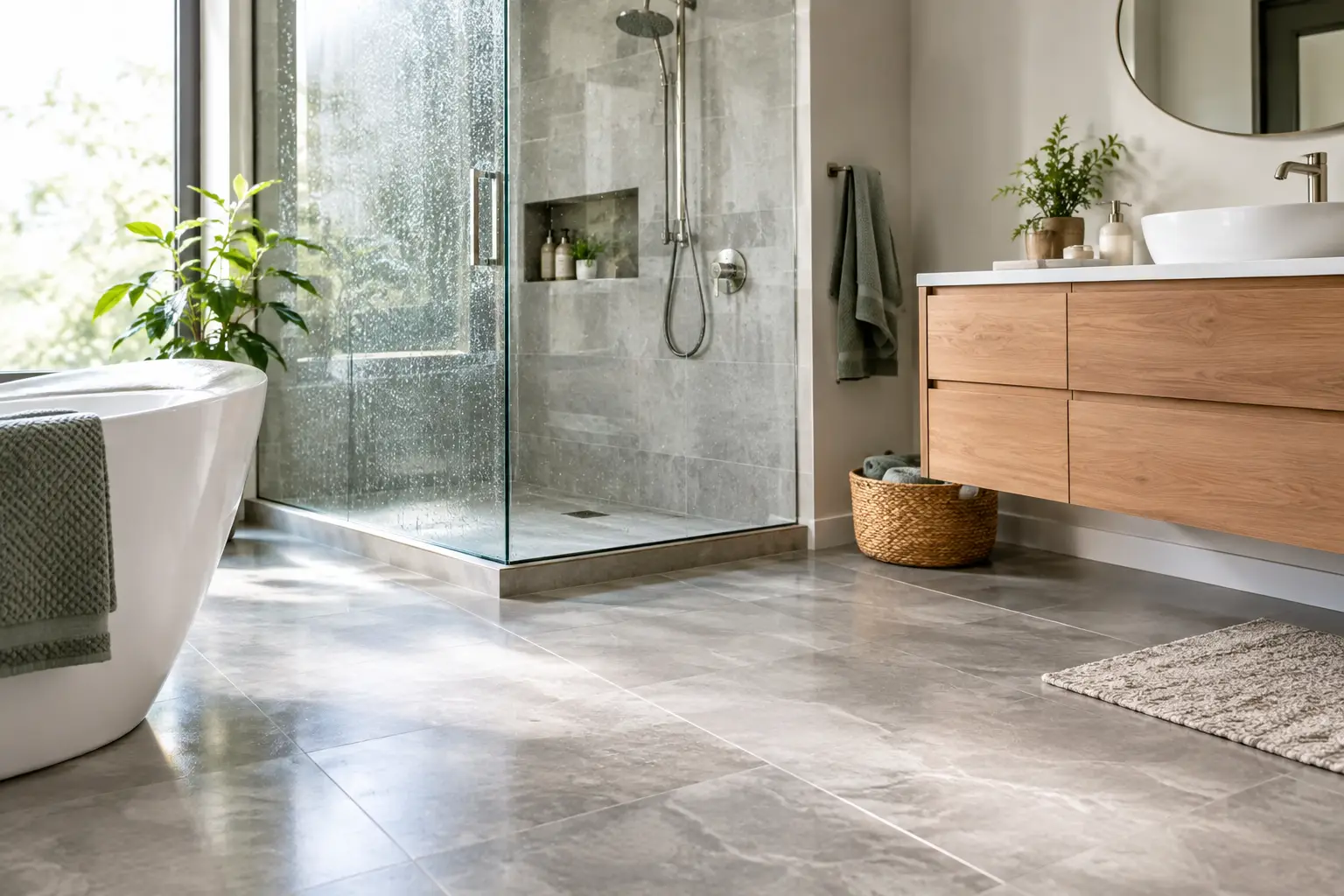
Porcelain tile is one of the strongest all-around choices for a humid bathroom. It is highly water-resistant, durable, and available in a wide range of colors, sizes, and finishes. Homeowners can choose a classic small tile, a large-format modern look, or porcelain that resembles natural stone or wood.
Because porcelain is fired at high temperatures, it absorbs very little water. That makes it a reliable option near showers, tubs, and vanities. It also holds up well to frequent cleaning and heavy foot traffic, which is helpful in a shared family bathroom.
The trade-off is installation. Tile requires a properly prepared, level substrate and a professional waterproofing approach in wet areas. Grout needs attention, too. Modern grout options are more stain-resistant than older products, but grout lines should still be cleaned and sealed when recommended. Tile can also feel cold underfoot, although a properly planned radiant heat system can solve that concern during a larger remodel.
Choose a Slip-Resistant Finish
For a bathroom floor, avoid selecting tile based on appearance alone. Highly polished tile can become slick when wet. A matte, textured, or slip-resistant porcelain finish is often the safer choice, especially for children, older adults, and busy households. Smaller tiles can also provide more grout lines for traction in shower areas.
Waterproof Luxury Vinyl Plank and Tile
Luxury vinyl plank, often called LVP, and luxury vinyl tile are popular choices for bathroom remodels because they combine water resistance with a warmer, more comfortable feel underfoot. Many products are marketed as waterproof, and quality options can handle the everyday moisture of a bathroom well.
Vinyl is also easier and faster to install than tile in many situations. It comes in realistic wood and stone looks, is generally quieter underfoot, and can be a practical option when a homeowner wants to update several connected rooms with one consistent flooring style. For bathrooms outside the shower enclosure, it is often a strong balance of appearance, durability, and budget.
The details matter. “Waterproof” typically refers to the flooring surface, not every part of the installation. Water can still enter around the perimeter, beneath poorly sealed transitions, or through gaps around plumbing fixtures. A qualified installer should follow the product requirements, prepare the subfloor correctly, and finish edges carefully. Deep standing water should still be cleaned up promptly.
Ceramic Tile Is a Dependable Value Choice
Ceramic tile is another excellent bathroom flooring option. It is water-resistant, easy to clean, and generally costs less than porcelain while offering plenty of design flexibility. For a guest bathroom, powder room, or standard full bath, it can provide long-lasting performance without stretching the budget.
Porcelain is usually denser and better suited to high-traffic or especially wet conditions, but ceramic is far from a poor choice. The right selection depends on the tile rating, where it will be installed, and the quality of the installation. A well-installed ceramic tile floor can serve a home for many years.
As with porcelain, use a floor-rated tile with an appropriate texture. Wall tile is not always suitable for flooring, and a beautiful glossy surface may not be the safest choice near a tub or shower.
Natural Stone Works, but Requires Commitment
Natural stone flooring can give a bathroom a distinctive, high-end look. Marble, travertine, slate, and limestone all have natural variation that manufactured flooring cannot fully duplicate. However, stone is not the lowest-maintenance option for a humid bathroom.
Many stone materials are porous and need to be properly sealed. Some are more likely to stain, etch, or show wear from common bathroom products. They also require careful cleaning, since harsh cleaners can damage the surface or finish. Stone can be a great fit for homeowners who appreciate natural materials and are prepared for the maintenance, but it is rarely the simplest practical choice for a busy bathroom.
Flooring Options to Approach Carefully
Some flooring materials can work in certain bathrooms, but they require more caution around humidity and water.
Solid hardwood is generally a poor fit for full bathrooms. It can expand and contract with moisture changes, and repeated exposure to splashes or leaks can cause cupping, staining, and gaps. Engineered hardwood is more stable than solid wood, but it still has a wood-based core and is not the first choice for a room with regular moisture.
Standard laminate flooring has improved over the years, and some manufacturers offer water-resistant versions. Still, many laminate floors are vulnerable if water reaches the seams or edges. A powder room with good ventilation may be one thing; a children’s bathroom with daily baths and wet towels is another. For most full bathrooms, waterproof vinyl or tile provides a safer long-term answer.
Do Not Overlook the Subfloor and Installation
A beautiful floor installed over a damaged or uneven subfloor can develop problems quickly. Before new flooring goes in, the existing floor should be removed as needed and the subfloor inspected for soft areas, water staining, mold concerns, or movement. These issues are especially common around toilets, tubs, and shower entries.
Tile needs a stable, properly prepared base to reduce the risk of cracking. Vinyl needs a smooth surface so imperfections do not show through over time. Floor height also needs to be planned carefully, particularly at the bathroom doorway and around the toilet flange. These details may not be visible once the work is complete, but they make a major difference in how the floor performs.
For a full bathroom remodel, it is smart to coordinate flooring with the vanity, shower waterproofing, baseboards, and wall finishes. Handling those connected details under one clear scope of work helps avoid mismatched transitions and unnecessary rework later.
How to Choose the Right Option for Your Bathroom
Start with how the room is actually used. A primary bathroom with a walk-in shower and two daily users benefits from the durability of porcelain tile or quality waterproof vinyl. A hallway bathroom used by children may call for slip-resistant tile and easy-clean grout. A powder room has less direct water exposure, which gives you more flexibility.
Then consider your priorities. Tile is usually the best choice for maximum water resistance and long-term durability. Waterproof luxury vinyl is often the better fit for homeowners who want a softer feel, a quicker installation, and a lower overall cost. Natural stone offers character but needs more care. The best answer is not always the most expensive material. It is the one that fits the room, the household, and the installation plan.
Finally, make ventilation part of the decision. Run the exhaust fan during showers and for a while afterward, repair leaks quickly, and avoid leaving wet bath mats on the floor for long periods. Those simple habits protect every type of bathroom flooring.
A bathroom floor should give you confidence, not another maintenance concern. With the right material and clean, careful installation, your bathroom can stay comfortable, durable, and ready for the daily demands of your home.