
A new floor changes how a home feels every day, from the sound of footsteps in the hallway to how easily a kitchen cleans up after dinner. When homeowners compare solid hardwood versus luxury vinyl, the right answer usually comes down to the room, the household, and how long they plan to enjoy the home – not simply which material costs less at the start.
Both options can look attractive and perform well when they are selected and installed correctly. The better choice is the one that fits your real life, including pets, children, busy entryways, occasional spills, and Sacramento’s hot, dry summers.
Solid Hardwood Versus Luxury Vinyl: The Quick Answer
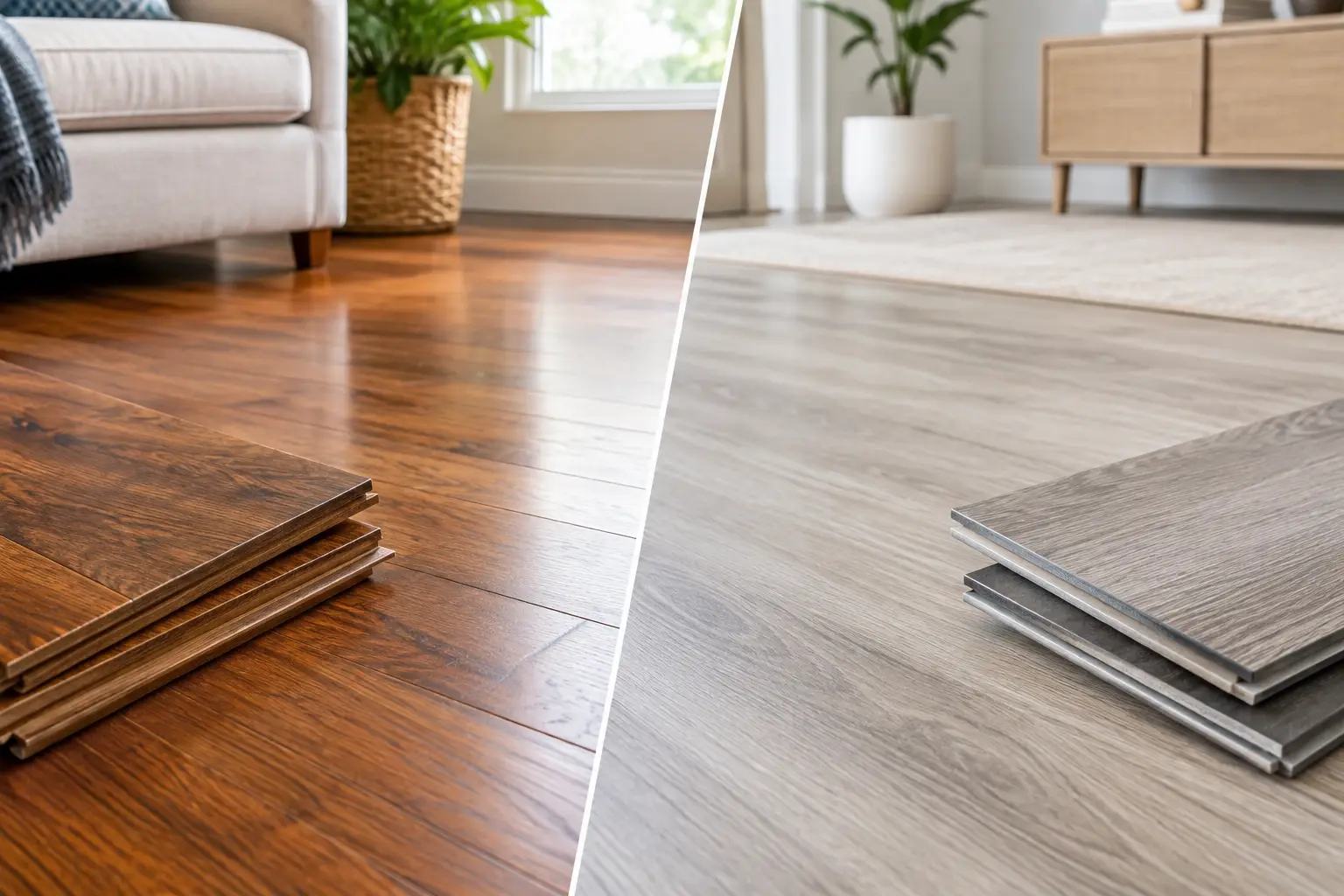
Solid hardwood is a natural wood floor made from one piece of lumber. It offers a classic appearance, can be sanded and refinished over its lifetime, and adds a level of warmth that many homeowners value. It is especially well suited to living rooms, dining rooms, bedrooms, and other dry areas where homeowners want a long-term finish with natural character.
Luxury vinyl is a manufactured flooring material available in plank or tile formats. Luxury vinyl plank, often called LVP, is designed to resemble wood, while luxury vinyl tile, or LVT, can resemble stone or tile. It is generally more resistant to water, scratches, and daily wear than hardwood, making it a practical choice for kitchens, bathrooms, laundry rooms, and active family spaces.
For a whole-home renovation, many homeowners use both. Hardwood may be the preferred finish in main living areas, while luxury vinyl handles rooms where moisture and heavy traffic are part of daily life.
Upfront Cost and Long-Term Value
Luxury vinyl usually has a lower upfront cost than solid hardwood. The material itself is often less expensive, and many luxury vinyl products are designed for a faster installation. This can make a meaningful difference when flooring is part of a larger kitchen remodel, bathroom renovation, or whole-home update.
Solid hardwood costs more because the material and installation require greater care. Existing subfloors may need preparation, boards must be properly acclimated to the home, and unfinished flooring requires sanding and finishing after installation. Those steps take time, but they also create a floor with a long useful life.
A lower initial price does not always mean lower cost over time. Quality hardwood can last for generations when maintained properly because it can be refinished several times. Luxury vinyl cannot be refinished once its wear layer is damaged. Still, a well-made luxury vinyl floor can provide many years of dependable service, particularly in rooms that would be hard on natural wood.
Hardwood may also carry stronger appeal for buyers in certain Sacramento neighborhoods. Resale value depends on the home’s price range, condition, and overall design, so it should not be the only reason to choose a floor. But for homeowners planning to stay for many years, the ability to restore hardwood rather than replace it can be a valuable advantage.
Moisture, Spills, and Everyday Durability
This is where luxury vinyl often has the clear advantage. Many luxury vinyl products have waterproof cores or water-resistant construction. Spilled drinks, wet shoes, and routine kitchen messes are less likely to cause permanent damage when they are cleaned up in a reasonable amount of time.
Solid hardwood does not do well with standing water. Moisture can cause boards to cup, swell, separate, or stain. A quick spill is usually manageable when wiped up promptly, but repeated wet conditions are not. Hardwood is generally not the best choice for full bathrooms, laundry rooms, or below-grade spaces where moisture risk is higher.
Hardwood can also show dents and scratches from large dogs, dropped items, and moving furniture. Some species are harder than others, and a matte finish can make normal wear less noticeable. Still, natural wood develops a lived-in character over time. Some homeowners love that look; others prefer a floor that hides daily activity.
Luxury vinyl is more forgiving with pets and busy households. Its protective wear layer helps resist scratches and scuffs, though it is not indestructible. Heavy furniture, sharp objects, and dragging appliances can still gouge or tear vinyl. Choosing a quality product and using floor protectors under furniture remains worthwhile.
Look, Feel, and Comfort Underfoot
Solid hardwood has depth, grain variation, and texture that cannot be fully copied. Every board is unique, and the material can gain character as it ages. For homeowners who want a traditional, warm, natural finish, that difference matters.
Luxury vinyl has improved significantly in appearance. Better products include realistic grain patterns, textured surfaces, wider planks, and color variations that can look convincing from across the room. It provides a consistent appearance and gives homeowners more options for wood-look styles that may be difficult or costly to achieve in real hardwood.
Underfoot, hardwood feels firm and solid. Luxury vinyl is also firm, but it can feel slightly softer and quieter depending on the product and underlayment. That can be helpful in homes with children, pets, or upstairs rooms where reducing footstep noise is a concern.
Neither floor is naturally warm in the same way as carpet, but both work well with area rugs. If radiant heat is part of the plan, verify the flooring manufacturer’s requirements before selecting either material. Product specifications matter, especially with solid wood.
Maintenance and Repair Expectations
Hardwood needs regular sweeping or vacuuming with a hard-floor setting, along with a cleaner approved for wood flooring. Avoid excess water, steam mops, and harsh cleaners. Small surface scratches may be improved with touch-up products, while deeper wear can be addressed by professional refinishing when the time comes.
Luxury vinyl is simple to maintain. Regular sweeping and damp mopping are usually enough. It is a practical option for homeowners who want attractive flooring without a more involved care routine. However, avoid abrasive pads, strong chemicals, and cleaners that leave a waxy residue.
Repair is one area where the trade-off becomes more noticeable. Individual luxury vinyl planks can sometimes be replaced, but matching an older product after several years may be difficult. Hardwood can often be repaired with replacement boards and refinishing, although matching species, grain, and stain color takes skilled work.
Installation Matters as Much as the Material
A flooring decision should account for what is underneath the floor. Subfloor condition, moisture levels, floor height, transitions to other rooms, cabinets, appliances, and existing trim all affect the finished result.
Solid hardwood requires a stable, dry subfloor and careful acclimation before installation. In Sacramento-area homes, seasonal temperature changes and indoor humidity can affect natural wood. Proper installation leaves room for normal expansion and contraction while keeping the floor secure and attractive.
Luxury vinyl is more flexible in certain situations, but it still needs a flat, properly prepared surface. A floating vinyl floor can telegraph dips, ridges, and debris below it. If the existing floor is uneven or damaged, preparation should not be skipped simply to save time. A clean, level base helps prevent gaps, movement, and visible imperfections later.
When flooring connects to a kitchen remodel or broader renovation, planning the sequence of work is especially helpful. Cabinets, baseboards, door casings, paint, and new appliances all need to be considered so the final details look finished rather than pieced together.
Which Floor Fits Each Room?
Solid hardwood is often a strong fit for living rooms, dining rooms, bedrooms, home offices, and hallways where a classic finish and long-term refinishing potential matter most. It can also work in kitchens for homeowners who are prepared to clean spills quickly and accept some natural wear.
Luxury vinyl is often the more practical choice for bathrooms, laundry rooms, mudrooms, kitchens, and homes with frequent pet or kid activity. It is also useful when homeowners want one continuous floor through several rooms but need better moisture resistance than hardwood can provide.
There is no need to force one material into every room. A thoughtful flooring plan can give each space the performance it needs while keeping colors, plank widths, and transitions coordinated throughout the home.
Before making a final decision, bring samples into the rooms where the flooring will be installed. Look at them in morning sun, afternoon light, and evening artificial light. Then consider the practical side: who uses the room, what gets spilled there, how much maintenance feels realistic, and whether the floor needs to handle a future remodel.
A careful in-home evaluation can prevent costly surprises. DL Remodeling can help Sacramento homeowners review flooring options, subfloor conditions, and connected renovation needs before work begins, so the final choice feels right long after installation day.