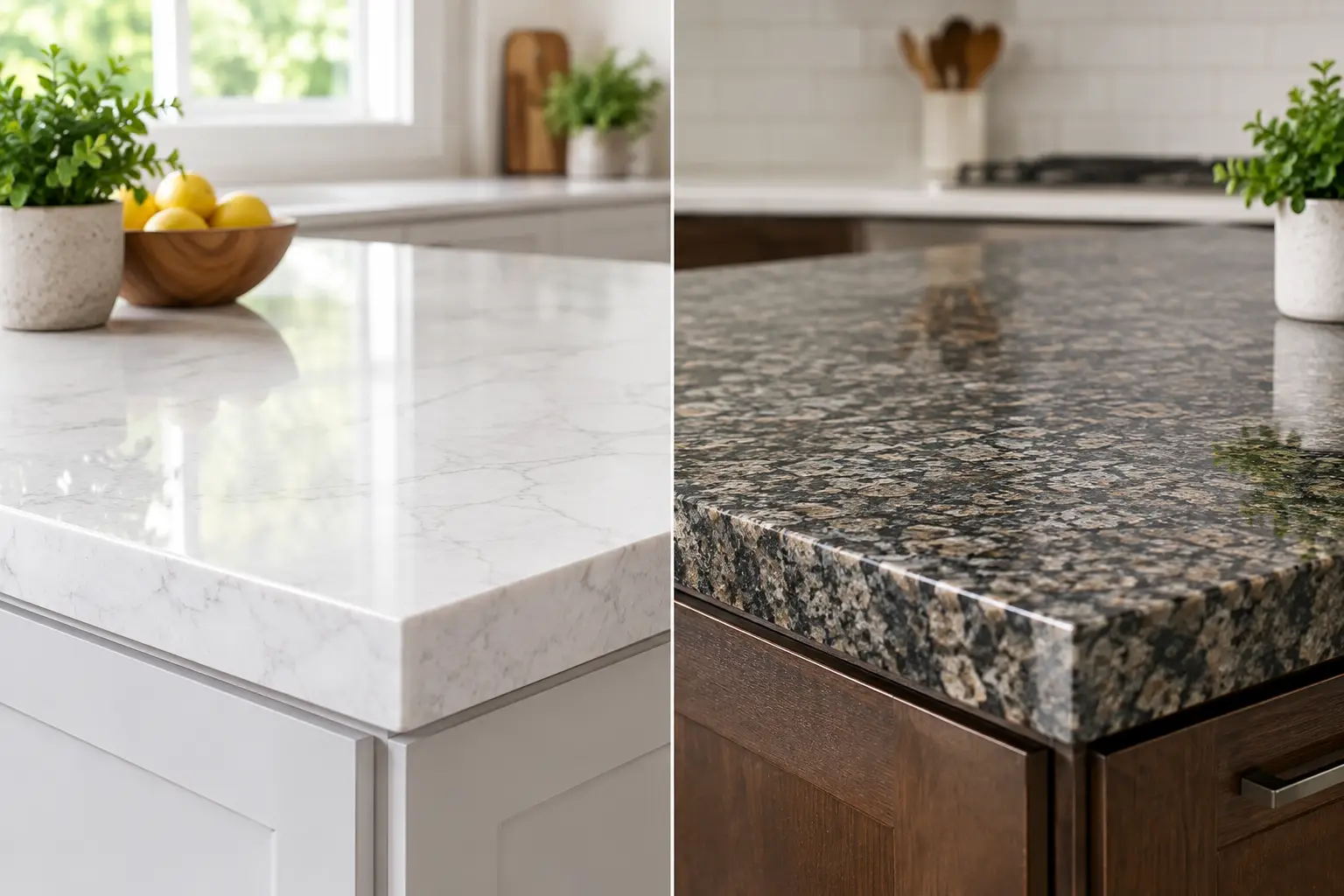

A countertop has to handle more than meal prep. It becomes the landing spot for grocery bags, school papers, hot serving dishes, and the occasional rushed weekday breakfast. When Sacramento homeowners compare quartz versus granite countertops, the right choice usually comes down to how the kitchen is used, how much upkeep feels reasonable, and the look they want to live with for years.
Both materials can add value, durability, and a finished appearance to a kitchen remodel. Neither is automatically better in every home. Quartz offers consistency and easy day-to-day care, while granite brings natural variation and stone character that cannot be duplicated. Understanding the practical differences before selecting a slab can prevent surprises after installation.
Quartz Versus Granite Countertops: The Main Difference
Quartz countertops are engineered surfaces. They are made with ground natural quartz combined with resins, pigments, and binding materials, then manufactured into slabs. This process gives homeowners a broad selection of consistent colors and patterns, from clean white surfaces to designs that resemble marble or natural stone.
Granite is a natural stone cut directly from the earth. Every slab has its own mineral patterns, veining, movement, and color variation. Even two slabs from the same source will not look exactly alike. For homeowners who want a kitchen with a one-of-a-kind natural feature, that variation is often the appeal.
The difference affects more than appearance. Quartz is nonporous, which means it does not normally require sealing. Granite is porous to some degree and needs periodic sealing to help protect it from stains and moisture. Both can perform very well in a busy family kitchen when properly selected and installed.
Appearance: Consistent Design or Natural Character?
The visual choice often comes first. Quartz is a strong fit for homeowners who prefer a controlled, uniform look. A large kitchen island can have predictable color and patterning from one end to the other. This can be especially helpful in kitchens with modern cabinetry, simple backsplashes, or a clean, bright color palette.
Quartz also gives homeowners more freedom when matching cabinets, flooring, and paint. Because samples tend to represent the finished slab more accurately, it can be easier to plan a coordinated kitchen design. That said, some quartz patterns are intentionally dramatic, with bold veining or movement that creates a more decorative focal point.
Granite makes a different statement. The color depth and natural movement can make an island or perimeter counter feel warm, substantial, and distinctive. A granite slab should always be viewed in person before final approval. A small sample cannot show the full range of veining, speckles, or color shifts that may appear across a larger piece of stone.
For a home with traditional cabinetry, warm wood tones, or a preference for natural materials, granite can be an excellent match. It can also work in contemporary spaces, particularly with darker, more uniform slabs. The key is choosing a stone that complements the room rather than competing with every other finish.
Durability in a Working Kitchen
Both quartz and granite are durable countertop options, but they handle certain conditions differently.
Quartz is highly resistant to everyday stains from coffee, oil, juice, and cooking ingredients because its surface is nonporous. It is also resistant to scratches during normal use. Still, it is not indestructible. Sharp knives can damage the surface, and cutting directly on any countertop will dull the knives. A cutting board remains the best practice.
Granite is also hard and scratch-resistant. Many homeowners appreciate that it stands up well to regular food preparation and family use. Once sealed correctly, granite resists stains effectively. However, if the sealant wears down or the countertop is not maintained, substances such as red wine, cooking oil, or acidic foods may soak in and leave a mark.
Heat is one area where granite typically has an advantage. Natural granite tolerates heat well, although using trivets is still the safest choice to protect the finish and avoid stress from sudden temperature changes. Quartz can be damaged by excessive direct heat because of the resins used in its construction. A hot pan from the oven should not be placed directly on quartz.
For most households, this does not make quartz impractical. It simply means the kitchen needs a few common-sense habits. Keep trivets nearby, use cutting boards, and clean spills without delay. Those steps protect either material and help a new countertop stay looking its best.
Cleaning and Long-Term Maintenance
Maintenance is where quartz is often the easier choice. Most days, warm water, mild soap, and a soft cloth are enough to clean it. There is no regular sealing schedule, which can make quartz appealing for homeowners who want low-maintenance surfaces without adding another item to the household to-do list.
Avoid harsh chemicals, abrasive scrubbers, and strong degreasers on quartz. These products can dull or damage the surface over time. If a sticky spill needs extra attention, use a nonabrasive cleaner that is approved for engineered stone.
Granite also cleans easily with a soft cloth and a stone-safe cleaner. The extra responsibility is sealing. Depending on the specific stone, its finish, and the sealer used, granite may need to be resealed periodically. A contractor or countertop fabricator can explain the recommended schedule for the selected slab.
Sealing is not usually a difficult job, but it matters. Homeowners who do not want to think about countertop maintenance may prefer quartz. Those who enjoy natural stone and are comfortable with a small amount of routine care may find granite well worth it.
Cost Depends on More Than the Material
It is easy to assume quartz is always more expensive than granite, or the other way around. In practice, pricing overlaps. Entry-level granite can cost less than many quartz options, while rare or premium granite can exceed the price of standard quartz. The final number depends on the slab selected, thickness, edge profile, layout, cutouts, backsplash details, and installation requirements.
A kitchen with a large island, several seams, a waterfall edge, or many appliance and sink cutouts will require more fabrication work regardless of material. Removing existing countertops, adjusting cabinetry, updating plumbing connections, and coordinating backsplash installation may also affect the total project budget.
When reviewing estimates, homeowners should look beyond the cost per square foot. Confirm what is included in measurement, fabrication, delivery, installation, sink cutouts, demolition, and haul-away. A clear scope helps keep the project on budget and reduces last-minute decisions.
Which Countertop Works Best for Your Home?
Quartz is often the practical choice for busy households that want a consistent appearance and simple maintenance. It works well for homeowners who cook often, want light colors without worrying as much about stains, or prefer a polished, predictable design. It can be particularly useful in a full kitchen update where cabinetry, flooring, paint, and countertops need to work together cleanly.
Granite is often the better fit for homeowners who value authentic natural stone, unique color variation, and strong heat resistance. It brings character that manufactured surfaces cannot fully copy. A carefully chosen granite slab can become the feature that gives a remodeled kitchen its personality.
There are also situations where the decision is less clear. A homeowner may love the look of granite but want low maintenance, in which case a quartz design with natural-looking movement could be a better compromise. Another homeowner may prefer quartz but do a lot of high-heat cooking, making granite worth a closer look. The right material should support daily life, not create extra worry.
Plan the Countertop With the Whole Remodel in Mind
Countertops are installed late in many kitchen remodels, but they should be chosen early. The slab color influences cabinet finishes, wall paint, flooring, backsplash tile, hardware, and lighting. Waiting until every other material is selected can limit options or create a rushed decision.
It also helps to think about details that are easy to overlook. The sink style, faucet placement, edge profile, overhang for seating, and backsplash height all affect how the countertop functions. If an existing kitchen has damaged cabinets, uneven walls, outdated plumbing, or poor lighting, addressing those connected issues during the remodel can lead to a cleaner, longer-lasting result.
A local, licensed remodeling contractor can help homeowners coordinate these moving parts, from cabinet and countertop planning through installation and finishing work. At DL Remodeling, the focus is on clear communication, clean workmanship, and building a kitchen that fits the household’s budget and routine.
The best countertop is the one you can use comfortably every day. Visit slabs in person, bring cabinet and flooring samples, ask how the material will be fabricated and maintained, and choose the surface that makes your kitchen feel more useful as well as more finished.